
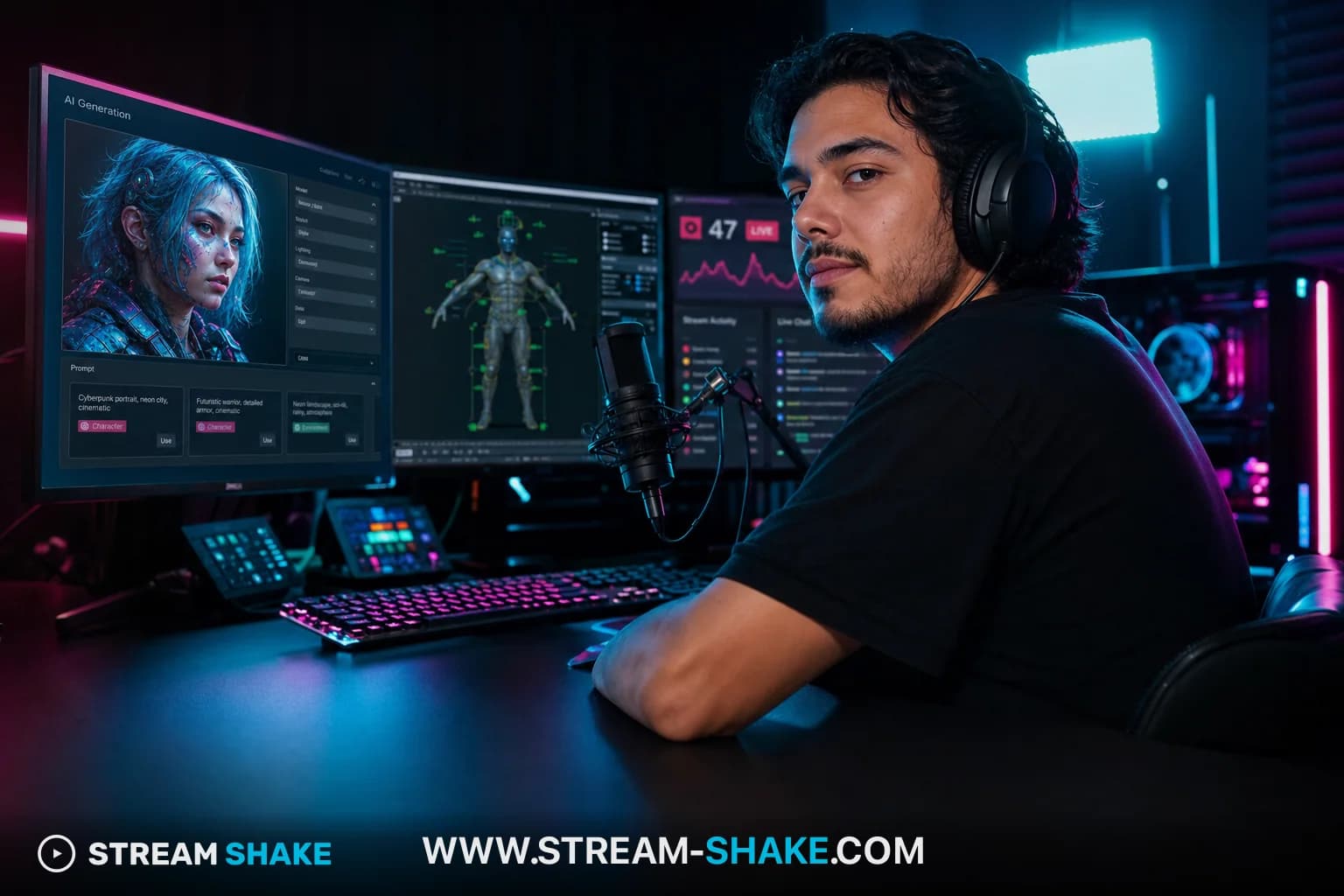
What began in the mid-2010s—crystallized largely by the historical founder of the medium, Kizuna AI, who coined the term "Virtual YouTuber" in 2016—as an experimental blend of anime culture and motion-capture technology has evolved into a dominant force across platforms like Twitch, YouTube, and TikTok. As of 2026, virtual creators are not merely competing with traditional, camera-facing broadcasters; in many instances, they are vastly outperforming them in viewership, subscriber counts, and monetization.
The Economic Scale of the Virtual Content Creator#
To understand the trajectory of animated streaming, it is necessary to examine the financial infrastructure supporting it. The VTuber market is embedded within the broader creator economy, which was valued globally at over $250 billion in 2025 and is projected to exceed $500 billion by 2030. Within this macroeconomic framework, avatar-based content represents one of the fastest-growing sub-sectors.
Market Size and Discrepancies in Valuation
Precise, universally agreed-upon financial figures for the VTuber market are inherently difficult to isolate, as revenue is scattered across platform subscriptions, merchandise, direct donations, and localized agency salaries. Consequently, prominent financial analysis firms offer varying estimates for the 2025–2026 market window, reflecting different methodologies in categorizing "virtual entertainment."
$3.13B
Conservative Market Estimate (2026)
Mordor Intelligence valuation, projecting 9.56% CAGR.
$3.8B
Moderate Market Projection (2025)
Market Intelo and Data Intelo, projecting 16.1% CAGR to $14.6B by 2034.
$7.26B
Aggressive Market Estimate (2026)
Global Growth Insights valuation, projecting 35.03% CAGR to $108.41B by 2035.
16,000+
Active VTubers Globally (2025)
A significant increase from a few hundred in 2019.
The synthesis of these diverse projections indicates that while the exact baseline valuation varies from $3.13 billion to $7.26 billion in 2026, the trajectory is universally recognized as exponential. This growth is heavily supported by the Asian-Pacific (APAC) region, which commands between 52% and 65% of the global market share. However, the North American market is rapidly accelerating, boasting the fastest regional growth rate at an estimated 17.4% CAGR.
Archetypes of the Animated Streamer: Competitors and Alternatives#
The term "animated streamer" is a broad umbrella that encompasses several distinct tiers of technology, investment, and operational complexity. Creators must choose a visual identity model that aligns with their budget, technical proficiency, and content strategy. The industry currently recognizes three primary formats: PNGTubers, 2D Live2D VTubers, and 3D VTubers.
The PNGTuber: Accessible and Budget-Friendly
A PNGTuber (derived from Portable Network Graphics) utilizes static 2D illustrations that toggle between different states—typically "idle" and "speaking"—based on audio input from the creator's microphone. Unlike high-end virtual models, a PNGTuber requires no complex skeletal rigging, no face-tracking cameras, and no premium motion-capture hardware.
| Tier | Cost Range | Key Features |
|---|---|---|
| Ultra-Basic | $20–$80 | Simple idle and talking images; often lacks commercial licensing. |
| Standard | $80–$200 | 2 to 4 expressions (happy, angry); includes commercial rights. |
| Premium | $200–$500 | 5 to 10 nuanced expressions, alternate outfits, high-resolution art. |
The primary advantage of the PNGTuber format is its incredibly low barrier to entry. Creators can seamlessly operate these avatars on low-end computers. Specifically, utilizing industry-standard logistical tracking software like Veadotube Mini, a creator only requires a 64-bit processor, a minimum of 1 GB to 2 GB of RAM, and 500 MB of storage. This software runs natively on operating systems as accessible as Windows 10, macOS 12 Monterey (or macOS 15 Sequoia), or Linux.
The Live2D VTuber: High Fidelity 2D Animation
For creators seeking full immersion, Live2D models offer real-time responsiveness. Live2D technology takes a flat, two-dimensional illustration and separates it into hundreds of individual layers. A specialized artist—known as a rigger—then maps these layers to a digital skeleton. When the streamer smiles, blinks, or tilts their head in front of a tracking camera (often a modern smartphone utilizing ARKit depth-sensing technology), the logistics software—most commonly VTube Studio—captures the telemetry, and the 2D avatar mimics the motion flawlessly.
| Tier | Cost Range | Key Features |
|---|---|---|
| Basic to Mid-Tier | $500–$1,500 | Standard facial tracking and limited physics (e.g., simple hair bouncing). |
| Professional | $1,500–$5,000 | Refined physics, full-body detailing, advanced rigging (e.g., 70-degree head angles). |
| Premium Studio Rigs | $5,000–$10,000+ | Dynamic physics, multiple layered outfits, flawless lip-syncing capabilities. |
The 3D VTuber: Full Immersion and Spatial Freedom
3D models take this a step further, allowing for 360-degree rotation and full-body motion capture, enabling virtual concerts and complex dancing. To operate a 3D avatar, creators typically employ robust tracking software such as Warudo or VSeeFace, pairing it with intensive mocap hardware setups.
| Tier | Cost Range | Key Features |
|---|---|---|
| Pre-Made Avatars | $50–$500 | Generic designs with limited customization, purchased from asset stores (e.g., Booth). |
| Custom Models (Basic Rigging) | $500–$2,000 | Unique designs for basic movement and standard facial expressions. |
| Advanced Custom (Studio-Level) | $2,000–$15,000+ | High-end models for full mocap compatibility, realistic proportions, intricate textures. Rigging can add $2,000–$5,000+. |
While free software such as VRoid Studio allows creators to generate basic 3D models at no cost, bespoke, brand-defining avatars remain a major financial hurdle. Consequently, the industry has seen a massive influx of PNGTubers as a competitive alternative to the exorbitant costs of 2D and 3D rigging.
Summary of Avatar Formats
| Feature | PNGTuber | Live2D VTuber | 3D VTuber |
|---|---|---|---|
| Animation Paradigm | Voice-activated image swapping (static states) | Flat 2D art separated into layers and rigged to a skeleton | Fully modeled 3D polygonal mesh with a 360-degree skeletal rig |
| Tracking Input | Microphone audio only | Webcam or Smartphone (ARKit) | High-end Webcam, ARKit, or Full-body mocap hardware |
| Software Required | Veadotube Mini, Discord Reactive | VTube Studio, PrprLive | Warudo, VSeeFace, VRChat |
| Baseline PC Specs | Very Low (1-2GB RAM, basic CPU) | Moderate (Requires dedicated GPU for smooth physics rendering) | High (Requires robust GPU for real-time 3D rendering) |
| Total Cost Range | $0 to $500 | $500 to $10,000+ | $50 to $15,000+ |
| Pros | Lowest cost; runs on older laptops; no webcam anxiety; simple setup. | Highly expressive anime aesthetic; industry standard for top creators. | 360-degree rotation; allows for full-body tracking, dancing, and VR integration. |
| Cons | Very limited physical expression; lacks visual dynamism for complex reactions. | Highly expensive; locked to a forward-facing 2D plane. | Time-consuming to render; high hardware costs; "jank" tracking if hardware fails. |
The Transmission Pipeline: OBS Studio Integration
- Launch your specific avatar tracking software (e.g., Veadotube Mini, VTube Studio, Warudo) locally on your computer.
- Configure the tracking software to use a green-screen or transparent background for your avatar.
- Open OBS Studio and add a "Game Capture" or "Window Capture" source, targeting your avatar tracking software.
- In OBS Studio's source settings for your avatar, enable "Allow Transparency" (or apply a Chroma Key filter if using a green screen) to seamlessly overlay the avatar atop your gameplay or desktop capture.
- Transmit the unified video feed from OBS Studio to your preferred platform, such as Twitch or YouTube, with your animated avatar integrated.
Real Examples Shaping the 2026 Landscape#
To understand the mechanics of audience engagement in 2026, one must analyze the creators who dominate the top echelons of platform leaderboards. The current landscape is defined by traditional corporate VTubers, rising independent western creators, and the unprecedented disruption of artificial intelligence.
The Phenomenon of Neuro-sama: The AI Broadcaster
Perhaps the most disruptive force in animated streaming is Neuro-sama, an AI-powered VTuber created by computer programmer and streamer "vedal987." Originating in 2018 as a simple bot designed to play the rhythm game osu!, Neuro-sama has been continuously upgraded into a fully animated 2D avatar powered by a sophisticated Large Language Model (LLM), a synthetic text-to-speech voice engine, and custom systems coded in C# and Python.
126
Hype Train Level (World Record)
Achieved during a 24/7 subathon in January 2026, crushing previous records.
296,000+
Peak Active Subscribers (World Record)
Aggressively dethroned top human streamers to become the most-subscribed channel on Twitch.
“Viewers pour an estimated $1.5 million into platform spending during these subathons because they find the chaotic, unpredictable AI character deeply entertaining, proving that parasocial relationships can extend to purely synthetic entities.”
The success of Neuro-sama highlights a critical psychological evolution in viewer behavior. Audiences are not being deceived into thinking Neuro-sama is human; rather, they are paying for the spectacle. The AI is programmed with a chaotic, unpredictable personality that regularly trolls her own creator and says bizarre things a human would self-censor.
Corporate Megastars vs. Independent Disruptors
While Japanese agencies like Hololive and Nijisanji have traditionally dominated the charts with talents like Gawr Gura and Miko Ch., the Western market saw a massive independent breakthrough in 2025 with an American creator known as TheBurntPeanut.
60.2M
TheBurntPeanut Hours Watched (2025)
Industry-leading figure, propelled by tactical shooter streams.
4.6M+
Gawr Gura YouTube Subscribers
Most subscribed VTuber on YouTube.
2.43M+
Miko Ch. Subscribers
Top corporate VTuber.
TheBurntPeanut's ascension is notable for his deliberate subversion of VTuber tropes. Rather than utilizing an expensive, highly detailed anime avatar, his model is a simplistic, animated burnt peanut. This contrarian branding caused significant controversy when he won "Best VTuber" at The Streamer Awards in late 2025, breaking a three-year streak held by traditional VTuber Ironmouse. Traditional VTubing communities expressed outrage, but his explosive growth proved the power of unique content.
Twitch Policies and the Regulatory Environment#
As animated streaming captures massive audiences, platforms have struggled to adapt their traditional content moderation frameworks to virtual bodies. Twitch, the primary hub for live broadcasting, has undergone significant policy shifts that directly impact how VTubers are permitted to present themselves.
The Attire Guidelines and Anatomical Restrictions
Historically, Twitch enforced strict clothing guidelines on human creators, but their application to illustrated avatars remained ambiguous. In October 2024, Twitch released explicit "Enforcement Notes" clarifying that animated streamers are subject to the exact same anatomical restrictions as flesh-and-blood humans. VTuber models must wear attire appropriate for a public setting, strictly covering genitalia, buttocks, hips, female-presented nipples, and underbust with fully opaque clothing.
This specific focus on the hips and underbust sparked intense backlash within the creator community. In protest, some creators designed satirical "VTuber Chastity Belts" featuring the Twitch logo to plaster over their models' hips to avoid bans.
The Prohibition of Child-Like Avatars
In addition to standard attire rules, Twitch has aggressively targeted the depiction of minors in animated forms. The platform's policies explicitly prohibit depicting fictional anime characters with a child-like appearance—commonly referred to as "lolis" or "shotas"—with any kind of sexual framing. This rule applies to both standard VTuber models and 3D avatars uploaded into social environments like VRChat, regardless of whether the human operating the avatar is legally an adult.
The Epidemic of Fake Engagement and Viewbotting#
Beyond visual regulations, the most severe operational threat to both platforms and creators is the manipulation of audience metrics. As the creator economy becomes increasingly saturated, the temptation to artificially inflate viewership to secure algorithmic favor and brand sponsorships has spawned a lucrative black market of botting services.
Understanding the Mechanics of Viewbotting
Twitch defines viewbotting as "the practice of artificially inflating a live view count, using illegitimate scripts or tools to make the channel appear to have more concurrent viewers than it actually does." Modern viewbots are sophisticated; they do not merely artificially raise the viewer number, but are often accompanied by chat activity bots that mimic human interaction, sending generic messages to create the illusion of a highly engaged community.
10,000-20,000
Estimated Inflated Viewers (Historical)
Some prominent streamers historically inflated their numbers.
Platform Crackdowns
In response to the pervasive nature of this fraud, Twitch regularly updates its detection algorithms. In August 2025, Twitch rolled out a massive backend code update to identify inauthentic viewership. The immediate result was a sitewide impact, aiming to mitigate the risks associated with viewbotting for organic growth.
Glossary of Animated Streaming Terms#
Frequently Asked Questions#
What is the difference between a PNGTuber and a Live2D VTuber?
A PNGTuber uses static 2D images that swap based on audio input, offering minimal animation at a very low cost and PC requirement. A Live2D VTuber uses a rigged 2D model with hundreds of layers that animate in real-time based on webcam facial tracking, providing more expressive movement but at a higher cost and requiring more powerful hardware.
How much does it cost to become an animated Twitch streamer?
The cost varies significantly. PNGTubers can range from $0 (free tools) to $500 for premium assets. Live2D VTubers typically cost between $500 to $10,000+. Fully customized 3D VTubers, especially with professional motion capture setups, can range from $50 to $15,000+ or even higher for studio-level models.
Can AI-powered VTubers interact with chat in real-time?
Yes, AI-powered VTubers like Neuro-sama can interact with Twitch chat in real-time. They are typically driven by sophisticated Large Language Models (LLMs) and synthetic text-to-speech engines, allowing them to respond to viewer comments, play games, and react to content without direct human intervention during a stream.
What are Twitch's specific rules for animated avatars?
Twitch enforces the same attire guidelines for animated avatars as for human streamers, requiring full coverage of specific anatomical areas (genitalia, buttocks, hips, female-presented nipples, underbust) with opaque clothing. Additionally, Twitch strictly prohibits depicting fictional characters with a child-like appearance if there is any sexual framing, regardless of the operator's age. Violations can lead to immediate and permanent account suspensions.
Join Stream Shake and connect with real viewers to build your community authentically.