
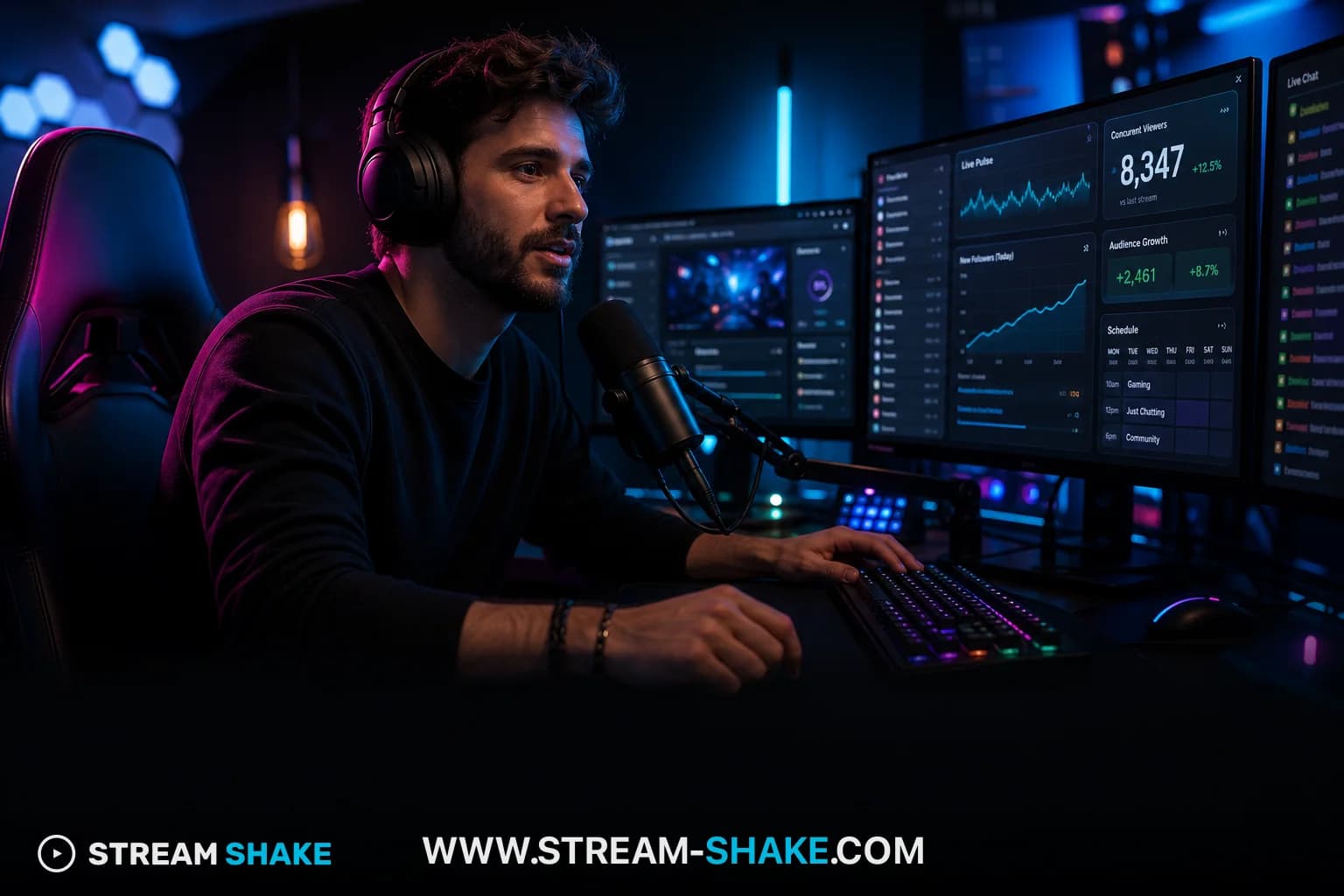
The 2026 live-streaming landscape presents a complex, often polarized ecosystem for content creators, demanding strategic navigation of massive platform shifts. To understand the algorithmic "cold start" problem that plagues the industry, one must imagine opening a world-class restaurant in the middle of an empty desert versus opening that same restaurant in a heavily populated shopping mall. This immense pressure has historically driven many toward the perilous trap of artificial engagement, but evidence leans heavily toward a future where sustainable growth requires a blend of legitimate community networking and algorithmic optimization. Navigating this environment requires a deep understanding of current platform demographics, shifting corporate policies, the genuine risks of synthetic growth, and modern, Terms of Service (ToS) compliant strategies necessary to cultivate a genuine audience.
The Cultural Vanguard: The "CORE" Streamer Phenomenon#
To understand the aspirations and operational models of modern Twitch streamers, one must examine the pinnacle of current broadcast culture: the creator collective. The concept of a "core Twitch streamer" has evolved from a solitary gamer broadcasting from a bedroom into highly organized, multi-million-dollar entertainment collectives.
The most prominent example of this evolution in 2026 is the formation of the collective appropriately named CORE.
The Exodus from Traditional Esports Organizations
The genesis of the CORE collective provides a vital case study into the shifting power dynamics between individual creators and legacy esports organizations. Throughout late 2024 and 2025, FaZe Clan, a historically dominant force in gaming entertainment, underwent a tumultuous period of internal restructuring and corporate divestiture. Amidst accusations of financial mismanagement and the closure of the FaZe Media division, corporate leadership reportedly issued an ultimatum to its top creators: join a newly launched creator agency named HardScope—which allegedly demanded a 20% cut of their overall revenue—or go independent. Believing the corporate business model to be unsustainable, a group of the platform's most popular personalities rejected these terms. On December 25, 2025, this cohort officially announced their departure from FaZe Clan on the social media platform X, triggering a massive paradigm shift in the streaming industry.
The Launch of CORE: Create, Own, Run, Everything
Following months of speculation, the displaced creators officially rebranded and consolidated their massive audiences under a new banner on April 30, 2026. The collective, an acronym for "Create, Own, Run, Everything," represents a direct ideological rejection of the exploitative corporate contracts they previously endured. The roster brought together a formidable concentration of Twitch viewership power, consisting of:
- A former professional Fortnite player known for high-energy, competitive gameplay who commands a staggering 4.59 million followers and averages roughly 28,000 Concurrent Viewers (CCV).
- Specializing in IRL (In Real Life) and Valorant content, this creator boasts 2.22 million followers and averages 17,900 CCV, holding an all-time peak of over 123,000 viewers.
- A veteran Twitch pioneer who primarily streams Just Chatting and Grand Theft Auto V, maintaining 1.13 million followers and an average CCV of 4,500.
- Active since April 2018, he holds 1.47 million followers and averages 7,400 CCV in Call of Duty and Fortnite categories, achieving a historic peak of over 140,000 active subscribers.
- A high-growth personality streamer focusing on Just Chatting, boasting 2.48 million followers and a 14,800 CCV average, having gained over 45,000 new followers in a single 30-day window.
- A Twitch partner since January 2024, he operates prominently within the Just Chatting directory with an average CCV ranging between 6,000 and 11,000.
The launch of CORE was not merely a rebrand; it was a demonstration of massive capital and audience mobilization. The group began operations from a newly acquired $20 million Los Angeles mansion, outfitted with a full-sized basketball court, a tennis court, a bowling alley, and a 19-car garage. This physical infrastructure—requiring financial resources comparable to industry titans like Kai Cenat, whose 2026 net worth is estimated at $45 million—was designed to facilitate continuous, high-production IRL streams, collaborative gaming sessions, and crossover events.
The Inherent Risks of High-Visibility Streaming
While the CORE model illustrates the absolute pinnacle of Twitch success, it also highlights the severe occupational hazards associated with live broadcasting. The visibility required to sustain such a collective attracts not only lucrative sponsorships but also malicious actors. On May 2, 2026, during their first full day of broadcasting from the new content house, the CORE collective was subjected to a "swatting" incident—a dangerous criminal hoax where heavily armed police are falsely dispatched to a creator's location. The terrifying event unfolded live on stream, with viewers watching as members were forced to exit the property with their hands raised while police surrounded the mansion with rifles drawn. This incident underscores a grim reality for the core Twitch streamer: profound digital success brings tangible, physical world risks. It reinforces the necessity for streamers at all levels to prioritize digital security, maintain strict privacy regarding their operational locations, and implement rigorous moderation protocols.
Decoding the 2026 Twitch Audience and Statistical Landscape#
For streamers attempting to ascend the ranks toward a professional career, a granular understanding of the platform's user base is mandatory. The strategy required to reach Twitch Affiliate or Partner status relies entirely on tailoring content to the statistical realities of viewer behavior.
Unprecedented Scale and Audience Demographics
By 2026, Twitch has solidified its position as the undisputed global leader in live streaming. The platform's raw scale dictates the mechanics of digital discovery.
140M+
Monthly Active Users
Approximate MAUs worldwide
35M+
Daily Active Users
Users logging in every day
20.8B Hours
Content Consumption
Hours viewed in 2024
2.3-2.5M
Average CCV
Concurrent viewers globally at any moment
The audience demographic is highly concentrated, digitally native, and interactive. Research suggests that 72% to 74% of the user base is under the age of 34, with a significant gender skew of approximately 63% to 65% male. Furthermore, while desktop viewing remains the dominant medium for dedicated fans (accounting for 58% of viewership), mobile consumption has surged to 41%. This shift toward mobile viewing necessitates that broadcasters optimize their on-screen overlays, font sizes, and audio mixing for smaller screens.
The Shift Toward Personality-Driven Content
The statistical dominance of specific content categories provides a roadmap for ambitious creators. While Twitch was founded explicitly for esports and video game streaming, its current landscape is vastly different. As of recent metrics, "Just Chatting" remains the undisputed most-watched category on the platform, routinely averaging over 250 million watch hours per month. This category encompasses everything from casual interactions and political discussions to reaction content and IRL broadcasts. This data reflects a profound cultural shift: the modern core Twitch audience often arrives for the personality of the streamer rather than the specific game being played. Gaming remains a vital foundational tool, but it is increasingly serving as the background activity for community interaction rather than the primary focal point.
The Dark Side of Growth: Viewbotting, Risks, and Platform Policies#
Faced with a highly competitive environment featuring over 7.3 million active monthly broadcasters, many small streamers encounter the aforementioned "cold start" problem. The platform's algorithm inherently favors streams that already possess a high concurrent viewer count, effectively burying channels with zero or single-digit audiences at the bottom of the directory. Desperation to bypass this algorithmic hurdle has fueled a multi-million-dollar illicit industry: artificial engagement.
The Scale and Sophistication of Modern Viewbotting
Viewbotting—the practice of using automated scripts or third-party services to illegitimately inflate a stream's concurrent viewer count—is not merely a technical nuisance; it is a severe threat to the integrity of the influencer marketing economy. A comprehensive 2025 whitepaper published by the analytics platform Streams Charts, in partnership with the agency Audiencly, exposed the startling breadth of this issue.
| Platform | Flagged Broadcasters (50+ Avg Viewers) | Estimated Fraudulent Watch Hours (Quarterly) |
|---|---|---|
| Twitch | 10.8% (over 4,400 channels) | 30+ Million Hours |
| Kick | ~16.6% (1 in 6 streamers) | ~20 Million Hours |
The economic implications of these figures are staggering. In a single quarter, artificial Twitch streams generated over 30 million fraudulent watch hours—a metric comparable to the global weekly viewership of a top-tier Netflix television series. The categories most heavily plagued by this synthetic traffic include Virtual Casino (accounting for 13% of all fake traffic), Just Chatting (10%), and Counter-Strike (9%). Modern viewbots have evolved far beyond basic numeric inflation. These illicit services now utilize advanced techniques such as rotating IP addresses to mimic diverse geographic audiences, and they deploy Artificial Intelligence (AI) to actively participate in the live chat, simulating genuine human interaction by responding to the streamer's questions. Consequently, brands utilizing automated campaign purchasing platforms (such as StreamElements or Gamesight) are losing hundreds of thousands of dollars to these falsified audiences.
The Platform Response: Twitch's May 2026 CCV Cap Policy
Recognizing that mass account purges were insufficient to deter the profitability of viewbotting, Twitch leadership drastically escalated their enforcement protocols. On May 7, 2026, Twitch CEO Dan Clancy announced a severe paradigm shift in how the platform penalizes artificial engagement. Rather than simply banning the bot accounts, Twitch engineered a system to directly punish the broadcaster benefiting from the inflation. Clancy instituted a Concurrent Viewership (CCV) cap. Under this new directive, channels identified as persistently utilizing viewbots will have a hard limit placed on the number of concurrent viewers displayed on all Twitch surfaces.
The mechanics of this punishment are highly calculated. The numerical cap is derived from historical data representing the creator's verified, non-viewbotted traffic. If a streamer normally averages 15 real viewers but purchases 500 viewbots, their channel will forcefully display only their legitimate average, completely neutralizing the algorithmic advantage they sought to purchase. Repeat violations result in exponentially longer penalty durations. Crucially, Twitch maintains strict operational secrecy regarding the exact parameters of its detection algorithms to prevent bot developers from reverse-engineering the system. While streamers are privately notified when an enforcement cap is applied, they are not publicly shamed, denying the illicit service providers the data necessary to adapt their code. However, this policy creates complex realities for genuine creators facing sudden organic growth. Consider an illustrative case: a mid-sized Valorant streamer averaging 120 viewers who suddenly lands a viral TikTok clip, causing their live Twitch audience to spike to 2,500 overnight. Under aggressive capping systems, that massive organic surge can look indistinguishable from synthetic manipulation, potentially triggering a cap that forces their viewer count back to 120 despite real humans watching.
Navigating the Appeals Process
To mitigate the risk of falsely flagged virality, Twitch instituted a specific appeals mechanism. If a creator believes their channel has been unjustly hit with a CCV cap, the immediate next logical step is to navigate the Twitch Appeals Portal.
- Log into the Twitch Appeals Portal and verify your contact information, including your username, email address, and phone number.
- Select the specific enforcement (CCV cap or chat ban) you are appealing from the list. Only enforcements issued within a 60-day window are eligible for appeal.
- Provide defensive context in the description box, referencing cross-platform analytics (e.g., links to a viral TikTok video or X post that drove the sudden traffic surge) if applicable.
- Submit the appeal and await judgment. You will receive an email notification updating the status to either "Accepted" or "Rejected."
The Perils of Follow-for-Follow (F4F) and Engagement Pods
Beyond automated viewbots, streamers often fall victim to coordinated human manipulation, commonly known as Follow-for-Follow (F4F), Lurk-for-Lurk (L4L), or Host-for-Host (H4H) networks. While these tactics involve real human accounts, Twitch officially classifies them as forms of "fake engagement" and explicitly prohibits them under their Terms of Service. The premise of F4F is a mutual exchange: a creator promises to follow a channel if the other creator returns the favor. However, this strategy is practically and algorithmically detrimental. Because the participating users are solely interested in inflating their own metrics, they do not actually watch, interact with, or financially support the content they are following. This results in a severely degraded channel profile—a broadcaster may boast 5,000 followers but suffer from an average concurrent viewership of zero. This vast discrepancy signals to both the Twitch algorithm and potential sponsors that the community is entirely unengaged or fraudulent, permanently crippling the channel's organic discoverability.
Competitor Drama: The Kick Platform Alternative
The crisis of synthetic engagement is not isolated to Twitch; it has triggered massive controversies across the broader streaming ecosystem, notably on rival platform Kick. Analyzing Kick as a competitor requires examining identical data points.
| Metric | Twitch (2026) | Kick (2026) |
|---|---|---|
| User Base | ~140 Million Monthly Active Users (MAUs) | ~100 Million Registered Users |
| Monetization Split | 50/50 base (up to 70/30 for Plus Program) | 95/5 flat rate favoring the creator |
| Affiliate Threshold | 50 followers + 3 average CCV | 75 followers + No CCV requirement |
| Viewbot Policy | Strict algorithmic bans & CCV Capping penalties | Historically looser, recently implementing adjustments amid controversy |
Kick has faced intense public scrutiny regarding its handling of artificial viewership. In late 2025, one of Kick's most prominent creators publicly accused Kick co-founder and CEO Ed Craven of actively "supplying" viewbots to creators to artificially inflate the platform's perceived market share. During a heated live broadcast, it was claimed that internal messages suggested platform leadership could arbitrarily edit any streamer's viewership numbers. This accusation coincided with Kick's controversial decision to reduce payouts within its Creator Program, a move leadership justified by citing the presence of "underlying views that aren't truly authentic." The resulting public relations disaster highlighted a critical lesson for emerging streamers: platforms plagued by unmoderated artificial engagement eventually suffer from a collapse in advertiser trust and creator revenue. Adhering to strict, ToS-compliant methodologies is the only sustainable path forward.
Lawful Growth Tactics for the Modern Streamer#
Given the severe algorithmic penalties associated with F4F schemes and the existential threat of Dan Clancy’s CCV capping policies, ambitious creators must rely strictly on legitimate, proven growth mechanisms. Sustainable Twitch growth in 2026 requires merging safe mutual community viewing with aggressive off-platform discoverability funnels via AI workflows.
The Stream Shake Methodology: Ethical Mutual Viewing
To combat the "cold start" problem without violating Twitch's Terms of Service, a specialized class of promotional networks has emerged. The leading platform in this space is Stream Shake, an entirely free, ToS-compliant mutual viewing community designed specifically for beginner and intermediate streamers.
- Stream Shake fundamentally differs from illicit viewbotting operations in its architecture and intent. It operates a reciprocal point economy of genuine human creators. Users watch peer broadcasts to earn points, which they subsequently spend to have real creators watch their own streams. The system heavily incentivizes active participation, rewarding bonus points for engaging in live chat (mandating a minimum character length to prevent spam).
- Entirely free to use. It operates exclusively on earned digital points rather than fiat currency.
- Accessed via a dedicated web platform where users register their Twitch (or YouTube/Trovo) channels.
- The ideal use case is for a beginner streamer seeking to eliminate the "empty room." By scheduling mutual viewers during the crucial first hour of a broadcast, a streamer ensures their channel has a baseline level of authenticated, real human activity. Because the traffic is organic, it contributes legitimately to CCV metrics and poses absolutely zero risk of triggering CCV caps. Conversely, it is not designed to replace organic fan acquisition, but rather acts as a starter motor to make the channel appear inviting to organic viewers scrolling the directory.
Integrating AI Workflows for Top-of-Funnel Discoverability
While Stream Shake provides the essential concurrent viewership needed to keep a channel algorithmically afloat, long-term audience acquisition requires "top-of-funnel" marketing. In 2026, this is predominantly achieved through specialized Artificial Intelligence (AI) clipping editors.
Two of the most prominent tools utilized for this workflow are Streamladder and OpusClip. To effectively leverage these tools, creators must understand their specific capabilities and constraints.
1. Streamladder
- Streamladder is an online platform that connects directly to Twitch and Kick, allowing users to fetch VODs without downloading heavy video files. It specializes in basic editing, allowing users to slice gameplay, separate webcam footage, add text, and reformat landscape video into vertical layouts tailored for TikTok, Reels, and YouTube Shorts.
- Features tiered pricing: Free (unlimited basic editing with no watermarks), Lite ($9.90/month), Pro ($19.90/month), and Premium ($49.90/month).
- Accessed via a web browser (Streamladder.com).
- Ideal for creators looking to quickly repurpose their VODs into short-form content for discoverability on platforms like TikTok and YouTube Shorts. It helps solve the time-consuming process of manual video editing, allowing streamers to focus on live content creation while maintaining an active presence on other social media channels.
2. OpusClip
- OpusClip is an AI-powered tool that automatically identifies the most engaging highlights from long-form videos (VODs) and repurposes them into short, viral-ready clips. It can add dynamic captions, intelligent reframing to keep the speaker in focus, and background music, significantly reducing editing time for creators aiming for virality.
- Offers various plans, including a free tier with limited minutes and paid subscriptions for higher usage and advanced features.
- Web-based platform (OpusClip.com) integrated with YouTube, Twitch, and other video sources.
- Perfect for streamers who want to maximize their reach by consistently publishing high-quality short-form content without manual clip curation. OpusClip streamlines the process of extracting potent moments from streams, making it easier to attract new viewers from social media back to their live Twitch channel. It's particularly useful for creators with long, unedited VODs who lack the time or expertise for extensive post-production.
- VOD
- Video on demand — the replay of your stream after you go offline. Separate from live viewer counts.
Frequently Asked Questions About Core Twitch Streamers and Growth
What is a 'core Twitch streamer' in 2026?
In 2026, a 'core Twitch streamer' often refers to highly organized, multi-million-dollar entertainment collectives like CORE, which represent a significant shift from individual broadcasters to coordinated content creation ventures. They are at the pinnacle of live-streaming culture, commanding massive audiences and significant capital.
How is Twitch combating viewbotting and artificial engagement?
Twitch introduced a Concurrent Viewership (CCV) cap policy in May 2026. This system penalizes channels persistently using viewbots by limiting their displayed concurrent viewers to their verified, non-viewbotted historical average, neutralizing the algorithmic advantage of fake traffic. Repeat violations result in longer penalty durations.
What are the inherent risks for high-visibility streamers?
High-visibility streamers face severe occupational hazards, including physical threats like 'swatting' (dangerous hoaxes dispatching armed police) and doxxing. The CORE collective, for example, experienced a live-streamed swatting incident at their $20 million mansion, underscoring the critical need for digital security and privacy.
What are lawful alternatives for sustainable Twitch channel growth?
Lawful growth tactics include ethical mutual viewing networks like Stream Shake, which uses a reciprocal point economy where real creators watch each other's streams. Additionally, integrating AI-powered clipping tools like Streamladder and OpusClip helps repurpose VODs into viral short-form content for off-platform discoverability, driving organic traffic back to Twitch.
How does Kick compare to Twitch for streamers in 2026?
Kick offers a more favorable 95/5 revenue split and looser affiliate thresholds compared to Twitch's 50/50 base (up to 70/30). However, Kick has faced controversies regarding platform-supplied viewbots and challenges with authentic audience validation, highlighting the importance of ToS-compliant strategies regardless of the platform.