
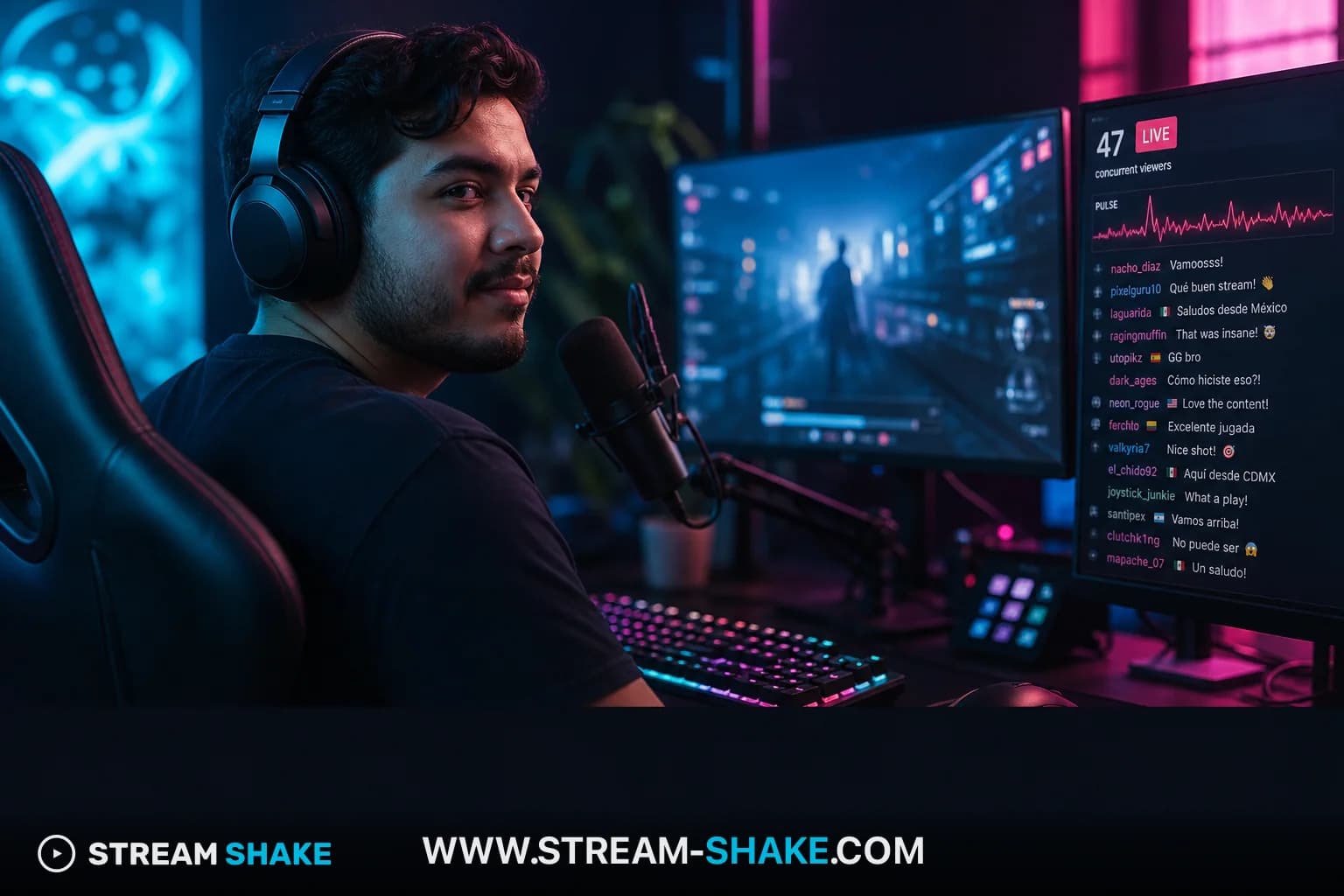
The livestreaming ecosystem in South Korea has fundamentally transformed, transitioning from a Twitch-dominated market to a fierce duopoly following Twitch's complete withdrawal. This shift has not only reshaped where Korean audiences consume content but also intensified regulatory scrutiny on artificial engagement and amplified physical safety risks for streamers globally.
The Great Migration: Why Twitch Left South Korea#
To comprehend the current state of Korean livestreaming, it's crucial to examine the economic and legislative factors that compelled Twitch, an Amazon subsidiary, to abandon one of the world's most lucrative gaming markets despite its commanding 52% market share (averaging 2.32 million monthly active users prior to its exit announcement).
The Economics of Network Usage Fees
In December 2023, Twitch CEO Dan Clancy announced the platform would cease South Korean operations by February 27, 2024. The primary reason was not a lack of audience, but the prohibitively high cost of video data delivery due to South Korea's unique Sending Party Network Pays (SPNP) law, often called an “internet traffic tax.” Korean network transit fees were roughly eight times higher than in Paris and ten times higher than in Frankfurt. Twitch was reportedly paying approximately 50 billion KRW (around $38 million USD) annually, with projections of up to 90 billion KRW.
Downstream Implications: The Chilling Effect
South Korea's SPNP law has created a chilling effect on the broader tech ecosystem, forcing many domestic content providers to host servers outside the country to avoid one-sided transit fees, stifling local infrastructure development and innovation.
The Aftermath, Expatriates, and Monetization Workarounds
Following the February 2024 shutdown, Twitch gradually off-boarded all Korean affiliates and partners, disabling monetization. However, Twitch remains globally accessible. A select group of “expatriate” Korean streamers, catering to international audiences, chose to stay on Twitch (which now holds only 2.9% market share in Korea by 2024).
These globally-focused creators rely on third-party Korean donation platforms like Twip and Toonation for domestic viewers, and VPNs or traditional overseas payment methods for international support, bypassing Twitch’s disabled payment gateways in the region.
Competitor Approaches: The CHZZK vs. SOOP Duopoly#
Twitch's departure created an immediate vacuum, quickly filled by two domestic titans forming a competitive duopoly that defines the 2026 Korean streaming market.
Naver CHZZK: The Strategic Successor
CHZZK (pronounced "Chizik"), launched by Naver in December 2023, was designed with a UI closely mirroring Twitch to ensure a smooth migration for displaced creators and viewers. Naver leveraged its massive ecosystem, integrating features like Naver Pay and allowing direct viewing through its portal.
CHZZK Market Metrics (Early 2026)
~3.54M
Monthly Active Users (MAU)
Captured 15.1% of total Korean viewership hours.
80% Male
Demographics
18-24 year olds constitute the largest age group.
Variety Gaming, VTubers
Content Focus
FPS and survival titles align with its ecosystem.
Naver secured naming rights for the LCK venue, rebranding it as the "CHZZK LoL Park," embedding the platform deeply into the physical esports landscape.
SOOP Korea: The Legacy Giant
SOOP Korea is the evolution of AfreecaTV, South Korea’s oldest livestreaming platform (launched 2005). Rebranded in early 2024, SOOP modernized its image and doubled down on its legacy strengths: hardcore esports broadcasting and real-time engagement.
SOOP Market Metrics (Early 2026)
~2.30M
Monthly Active Users (MAU)
Declined from 3M in 2021, but retains highly engaged core.
60,000 avg.
Concurrent Viewership
Outperforms CHZZK's 37,000 average.
30.4%
Market Share (Viewership Hours)
Gaming and esports account for 61% of traffic.
3 Esports Arenas
Physical Infrastructure
Including Sangam "SOOP Colosseum".
Platform Metric Parity Comparison
| Metric / Feature | Naver CHZZK | SOOP Korea |
|---|---|---|
| Monthly Active Users (MAU) | ~3.54 Million | ~2.30 Million |
| Market Share (Viewership Hours) | 15.1% | 30.4% |
| Demographics | 80% Male, 18-24 largest age group | 20-29 largest age group |
| Content Mix Focus | Variety Gaming, FPS, VTubers | 61% Gaming/Esports, 18% Variety, 19% Hobbies |
| Physical Infrastructure | "CHZZK LoL Park" Naming Rights | 3 Arenas (incl. "SOOP Colosseum") |
Real Examples: The Faces of Korean Streaming in 2026#
The choice of platform fundamentally dictates a creator's content strategy. Examining top creators reveals how audiences gravitate toward specific platforms based on content genres.
Esports Royalty: Faker on SOOP
Lee "Faker" Sang-hyeok, a legendary esports athlete, represents SOOP's strategy to dominate professional gaming. SOOP secured Faker and his organization, T1, in mid-2024 through a massive talent acquisition. His broadcasts are monumental events, with VOD replays of casual games still drawing tens of thousands of live participants.
The Variety Titan: Handongsuk on CHZZK
Han Song Uk, known as "Handongsuk," exemplifies the ideal CHZZK creator. A top Twitch streamer before migrating, he quickly became CHZZK's most-watched creator in early 2025. Handongsuk generated over 36.2 million hours of watch time in 2024 by cultivating interactive, narrative-driven broadcasts focused on new releases and MMORPGs like Lost Ark.
The VTuber Phenomenon: Woowakgood and ISEGYE IDOL
Oh Young-Taek, "Woowakgood," is a pioneer of Korean internet broadcasting and a key figure in the VTuber movement. Operating on SOOP, Woowakgood produced ISEGYE IDOL (ISEDOL), a successful six-member VTuber girl group. He orchestrated the "ISEGYE FESTIVAL 2025," a massive live concert at the physical Gocheok Sky Dome, blurring the lines between virtual streaming and mainstream K-Pop.
Real-World Risks: The Dangers of Global IRL Streaming#
While domestic streamers like Woowakgood operate safely behind virtual avatars, Korean creators who chose to remain on Twitch to serve global audiences face entirely different, often terrifying realities. In Real Life (IRL) streaming exposes broadcasters to severe physical security risks.
The Jinnytty Poland Incident
Yoo Yoon-jin, globally known as "Jinnytty," a prominent Korean expatriate streamer with over 1.1 million followers, faced a harrowing incident in May 2026 during her "Wobblethon" cycling challenge in Poland. A stalker, recognizing her from a livestream, followed her to a remote hotel, booked an adjacent room, and attempted to force entry into her room.
“Visibly terrified, Jinnytty barricaded her door and immediately turned her livestream back on, using her audience as a digital distress signal.”
She called authorities while her viewers and a local Polish streamer coordinated a rescue, culminating in police intervention 54 minutes later. This event underscores that for creators building communities in 2026, physical security protocols and location-delay broadcasting are paramount.
Platform Policies: The 2026 Crackdown on Fake Engagement#
Just as physical safety is paramount for IRL streamers, digital safety and platform compliance are existential requirements for channel survival. In 2026, the streaming industry has declared outright war on artificial engagement.
The FTC Mandate
On October 13, 2024, the U.S. Federal Trade Commission (FTC) enacted a strict ruling targeting fake reviews and "fake indicators of social media influence." This mandate classified viewbotting as a deceptive commercial practice, punishable by a maximum civil penalty of $53,088 per violation. The FTC demonstrated its enforcement willingness in late 2025 by issuing formal warning letters to ten companies. Consequently, platforms like Twitch, TikTok, and YouTube have significantly upgraded their detection systems to mass-remove bot accounts and restrict visibility for flagged channels.
Dan Clancy’s CCV Cap: Psychological Warfare on Bots
Twitch historically combated viewbots with ban waves, but bot developers adapted using residential proxies and unique device fingerprints. Realizing this 'whack-a-mole' approach was failing, Twitch CEO Dan Clancy introduced the Concurrent Viewer (CCV) Cap.
How the CCV Cap Works:
- Invisible Limits: If Twitch’s algorithms flag a channel for persistent viewbot use, the platform applies a hard cap to the streamer's displayed CCV across all Twitch surfaces.
- Historical Baselines: The maximum number of viewers allowed to be displayed is calculated based on the creator's historical, organic (non-botted) traffic.
This approach means individuals paying for viewbots won't be banned, but their viewership numbers will stubbornly refuse to rise above their organic baseline, destroying the economic incentive to purchase artificial engagement.
Lawful Growth Tactics: The Stream Shake Methodology#
With the threat of CCV caps and federal FTC fines looming, creators must escape the "zero-viewer cold start" algorithm trap by strictly adhering to lawful, community-driven growth tactics. Twitch’s Community Guidelines explicitly ban artificial inflation, but genuine communities where real humans actively watch and chat are entirely legal networking.
The Stream Shake Platform: Ethical Mutual Viewing
Stream Shake offers a premier lawful alternative to dangerous viewbot services. It operates as a mutual viewing community network for Twitch, YouTube, and Trovo, where creators earn points by watching and chatting in peers' broadcasts. These points can then be spent to receive real, concurrent viewers when they go live. It's designed for the "Zero-to-Affiliate Archetype"—new streamers can use it to get initial viewers, satisfying platform thresholds and boosting discoverability, while established creators with large organic audiences may find its impact less significant.
The Lawful Growth Playbook
Relying solely on one tool is insufficient. Creators must execute a comprehensive content funnel, combining a strict weekly schedule and optimized branding with strategic use of platforms like Stream Shake during the critical first hour of a stream. This foundational approach helps avoid the zero-viewer start and safely boosts directory placement, leading to organic discoverability.
Glossary of Streaming Terms#
- VOD
- Video on demand — the replay of your stream after you go offline. Separate from live viewer counts.
- Twitch Affiliate
- The first Twitch monetisation milestone — still driven by real viewers and stream consistency, not bought metrics.
Frequently Asked Questions About Korean Twitch Streamers
Why did Twitch leave South Korea?
Twitch withdrew from South Korea in February 2024 primarily due to the prohibitively high network usage fees imposed by the country's unique 'Sending Party Network Pays' law. These costs were significantly higher than in other regions, making operations financially unsustainable for the platform.
What platforms are popular in Korea after Twitch's exit?
After Twitch's departure, the Korean livestreaming market is now dominated by two domestic platforms: Naver's CHZZK and SOOP (formerly AfreecaTV). CHZZK caters more to variety gaming and VTubers, while SOOP maintains its focus on hardcore esports and high-engagement content.
Are there still Korean streamers on Twitch?
Yes, a niche group of 'expatriate' Korean streamers continues to broadcast on Twitch. These creators primarily target a global, English-speaking audience. They rely on third-party Korean donation platforms for domestic support and VPNs for international monetization, bypassing Twitch's disabled local payment gateways.
What are the biggest risks for streamers in 2026?
Streamers face dual risks: physical threats for In Real Life (IRL) broadcasters, as exemplified by the Jinnytty stalking incident, and digital threats from platform algorithm penalties due to stricter federal regulations against artificial engagement. The FTC imposes heavy fines for viewbotting, and platforms like Twitch use CCV caps to neutralize botting.
How can Korean streamers grow their channels lawfully?
Lawful growth involves strict adherence to Terms of Service and community-driven strategies. Platforms like Stream Shake offer ethical mutual viewing opportunities to overcome the zero-viewer cold start. Combining this with consistent scheduling, strong branding, and aggressive short-form content clipping helps achieve organic discoverability.