
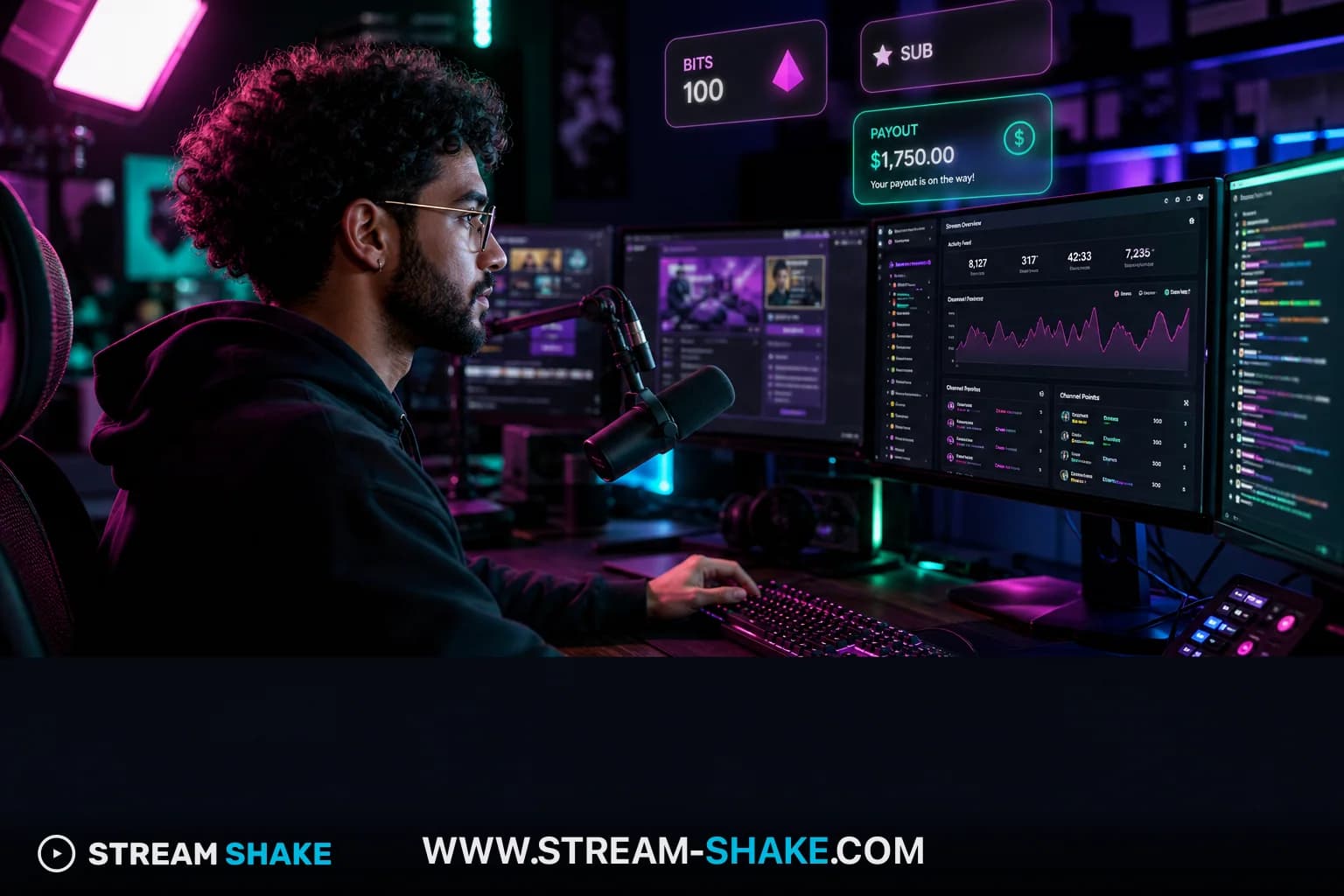
The landscape of live broadcasting has matured significantly from its chaotic early days. Achieving the status of a 'Partnered Streamer' in 2026 requires more than mere charisma and gaming proficiency; it demands a sophisticated understanding of platform economics, algorithm optimization, and risk management. This comprehensive report explores the modern realities of the live-streaming industry, serving as a strategic blueprint for navigating the complex, multi-platform creator economy of 2026.
The Evolution of Twitch Platform Policies: Affiliates, Partners, and the Plus Program#
To understand the trajectory of a partnered streamer, one must first decode the complex, tiered hierarchy that dictates creator monetization on Twitch. The platform utilizes a gamified progression system that gates access to revenue streams based on strict performance metrics.
The Streamlined Path to Affiliate
The foundational tier of Twitch monetization is the Affiliate Program. In early 2025, Twitch streamlined the legacy requirements to make the initial onboarding process more accessible to consistent creators.
25
Followers
Reduced from 50
4
Hours Streamed
Minimum within 30 days
4
Broadcast Days
Unique days within 30 days
3
Average CCV
Simultaneous live viewers
The Strenuous Ascent to Twitch Partner
While Affiliate status is achievable for most dedicated hobbyists, Twitch Partner status remains an exclusive tier. Meeting minimum requirements does not guarantee acceptance; applications are manually reviewed for community health and ToS compliance.
25
Hours Broadcasted
Minimum within 30 days
12
Broadcast Days
Unique days within 30 days
75
Average CCV
Across all streams
The Plus Program: The Economics of the Revenue Split
Historically, Partner status meant a higher revenue split. However, Twitch decoupled these concepts, introducing the 'Plus Program' (formerly Partner Plus) to govern subscription revenue. This program is tiered, available to both Affiliates and Partners, and based entirely on accumulating 'Plus Points' over three consecutive months.
| Tier 1 | $4.99 | 1 Point |
|---|---|---|
| Tier 2 | $9.99 | 2 Points |
| Tier 3 | $24.49 | 6 Points |
To ascend the revenue ladder, creators must hit specific point thresholds. Sustaining 100 Plus Points for three consecutive months unlocks Level 1 (60/40 revenue split). Maintaining 300 Plus Points for three consecutive months unlocks Level 2 (70/30 revenue split). The $100,000 annual revenue cap on the 70/30 split was removed in January 2024.
The Statistical Reality of the Streaming Economy#
To navigate the live-streaming landscape effectively, creators must understand the macroeconomic statistics that govern the industry. The 2025–2026 data reveals a highly saturated market characterized by extreme wealth inequality.
Platform Scale and the Viewer-to-Creator Ratio
250M+
Twitch MAUs (2025)
Monthly Active Users
35M
Twitch DAUs (2025)
Daily Active Users
95 min
Avg. Session Duration
Per user
11.4M
Monthly Streamers
Active streamers on Twitch
57k-66k
Twitch Partners
Globally
7.4
Avg. Stream CCV
Heavily skewed by top 1%
Market Share Shifts in the Live Streaming War
While Twitch remains the undisputed leader in cultural relevance, its absolute market dominance is waning. Global live streaming viewership reached 36.4 billion hours in 2025, representing 6% YoY industry growth. Yet, within that expanding market, Twitch's share declined.
36.4B
Global Hours (2025)
6% YoY Industry Growth
52.8%
Twitch Market Share
Down 8.9% YoY
24.3%
YouTube Gaming Share
Up 12% YoY
12.4%
Kick Market Share
Up 131% YoY
The Cold Start Problem and the Severe Risks of Viewbotting#
The single greatest threat to a new creator's longevity is the 'Cold Start' problem. Twitch's directory algorithm ranks live channels almost exclusively by Concurrent Viewership (CCV). Going live with zero viewers places a streamer at the bottom, guaranteeing invisibility.
Understanding Viewer Counting: Muted Tabs and Background Logistics
Twitch inherently counts 'lurkers' (viewers who do not interact in chat), and viewers still count even if the stream's audio is muted. However, modern browser power-saving features often reduce network priority for backgrounded tabs, causing viewers to drop from the CCV metric. The stream must be actively playing, ideally in a separate browser window.
The Temptation of Artificial Inflation
Faced with broadcasting to an empty chat, some desperate creators turn to illicit third-party services. These 'viewbots' use automated scripts and proxy networks to flood a channel with fake viewers, artificially inflating CCV to trick the Twitch algorithm.
“Viewbotting is a direct violation of Twitch's Terms of Service and fundamentally destroys sponsor trust. It ruins a creator's analytics, immediately flagging the channel as fraudulent.”
Twitch's 2026 Enforcement: The CCV Cap
In May 2026, Twitch radically altered its enforcement. Rather than immediate suspensions, Twitch now applies a 'CCV Cap' to offending streamers. This resolves 'weaponized viewbotting' where rivals would bot an innocent streamer to trigger a ban.
- Algorithmic Suppression: For persistently viewbotting channels, Twitch actively caps the displayed concurrent viewer count across all platform surfaces (directories, search, recommendations).
- Data-Driven Baselines: The cap is calculated based on the streamer's historical, non-viewbotted authentic traffic data. If a creator naturally averages 10 viewers but bots to 500, the system clamps their visible CCV to their authentic baseline.
- Silent Enforcement: Twitch does not publicly announce these enforcements to prevent botting companies from reverse-engineering detection. The penalized streamer receives a private notification detailing the penalty duration and an appeal avenue.
Lawful Growth Tactics: The Stream Shake Methodology#
With artificial inflation neutralized, creators must rely on lawful, community-driven tactics to bypass the cold start problem. This is where mutual viewing networks, specifically platforms like Stream Shake, provide immense, ToS-compliant value.
Understanding Lawful Mutual Viewing
Stream Shake operates as a mutual viewing marketplace designed exclusively for real creators to support one another. Unlike viewbotting, which relies on automated scripts, Stream Shake facilitates the exchange of genuine human attention across Twitch, YouTube, and Kick.
- Earning Points through Participation: Creators register, link broadcasting accounts, and earn points by actively watching peers' live streams. The system rotates streams to distribute attention evenly.
- Rewarding Genuine Engagement: The platform incentivizes actual participation. Viewers earn bonus points for meaningful chat activity (e.g., messages > 5 characters sent once per minute), ensuring an active chat room for the receiving streamer.
- Spending Points for Concurrent Views: When a creator goes live, they spend accrued points to request viewers. The platform then directs real, human streamers to watch the broadcast, providing authentic concurrent viewership that adheres to platform rules.
The Essential Creator Tool Stack
Modern streamers must behave like highly efficient media companies. In 2026, the most effective lawful growth systems integrate mutual viewing with an optimized software stack to handle production, distribution, and monetization. Here are five critical tools driving contemporary creator growth:
Frequently Asked Questions#
What are the key requirements to become a Twitch Partner in 2026?
To apply for Twitch Partner in 2026, you generally need to broadcast for a minimum of 25 hours across at least 12 unique days, while maintaining an average of 75 Concurrent Viewers (CCV) over a rolling 30-day period. Meeting these minimums does not guarantee acceptance, as Twitch also manually reviews community health and ToS compliance.
How has the Twitch Plus Program changed streamer monetization?
The Plus Program has decoupled Partner status from the highest revenue splits, making subscription revenue tiered based on 'Plus Points' earned from self-paid subscriptions. Tier 1 subs yield 1 point, Tier 2 yields 2 points, and Tier 3 yields 6 points. Achieving 300 Plus Points for three consecutive months unlocks the 70/30 revenue split, with no annual revenue cap.
Is viewbotting still a risk for streamers in 2026?
Yes, viewbotting remains a direct violation of Twitch's ToS and destroys sponsor trust. Furthermore, in 2026, Twitch implemented a 'CCV Cap' enforcement, where channels suspected of viewbotting have their displayed viewer count capped at their authentic historical baseline, rendering viewbots ineffective for discoverability and a waste of money.
What is the 'cold start' problem for new streamers?
The 'cold start' problem refers to the difficulty new streamers face in gaining visibility. Twitch's directory algorithms prioritize live channels by Concurrent Viewership (CCV). A streamer going live with zero viewers is placed at the very bottom of the directory, making organic discovery extremely challenging as potential viewers must scroll past hundreds of active channels.
How can Stream Shake help a streamer grow lawfully?
Stream Shake provides a ToS-compliant mutual viewing marketplace where real creators exchange genuine human attention. Streamers earn points by watching peers and then spend points to receive concurrent viewers for their own streams. This creates authentic baseline CCV and chat activity, helping channels rise in the directory and attract organic viewers without violating platform terms.