
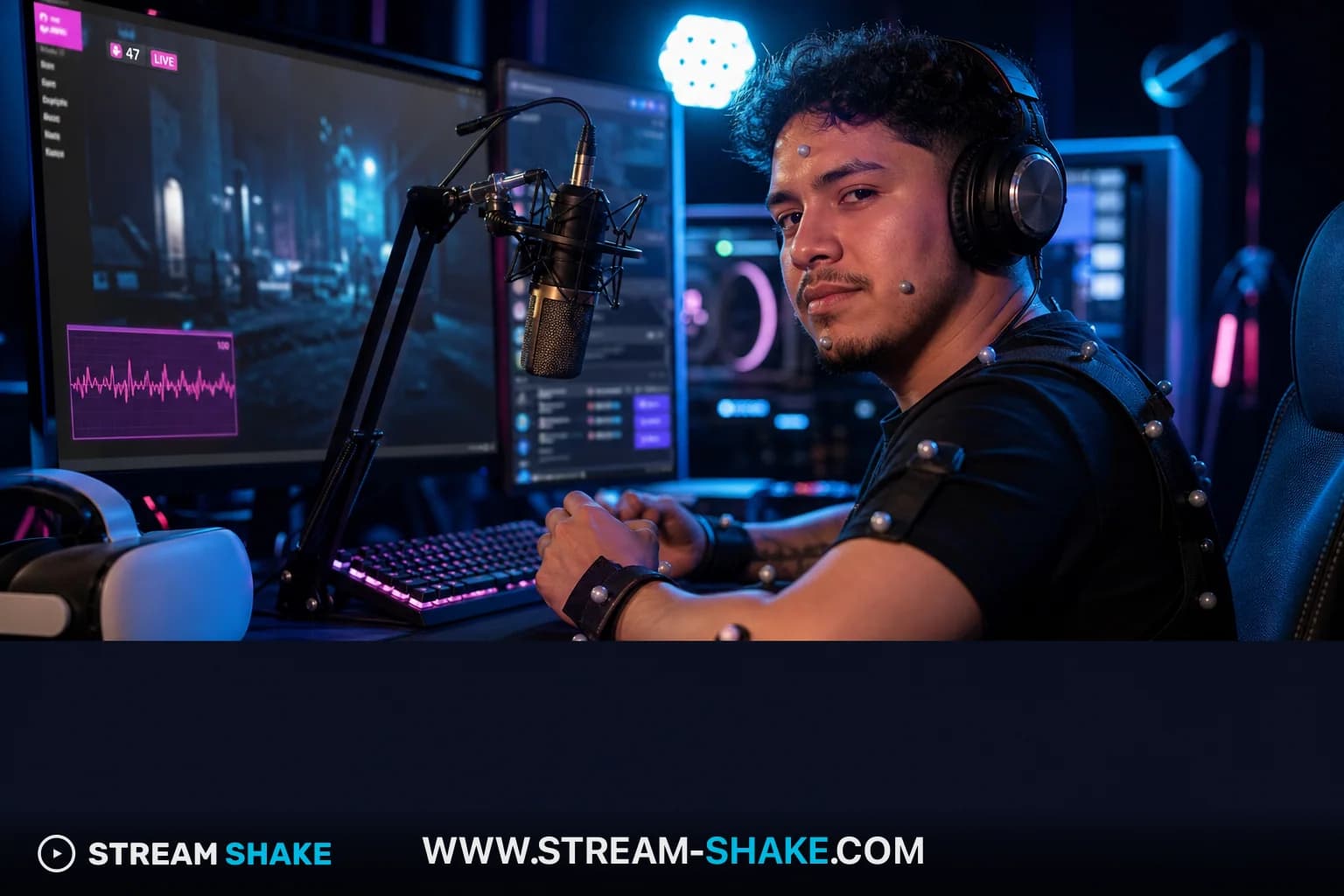
The intersection of immersive spatial computing and live broadcasting has evolved from a niche novelty into a robust, high-stakes sector of the creator economy. As we navigate through 2026, Virtual Reality streamers—predominantly broadcasting within digital sandbox environments—represent a unique vanguard in live entertainment, redefining parasocial interaction and pushing the boundaries of platform moderation.
The State of the VR Streaming Market in 2026#
Market Valuation and Hardware Rebound
The broader spatial computing industry, encompassing both Augmented Reality (AR) and Virtual Reality (VR), has officially transitioned out of its experimental phase. Analysts project that the combined global AR/VR market will reach an estimated valuation of $118.79 billion by the end of 2026. However, the consumer headset market experienced a notable period of volatility before achieving its current sustained growth.
7.5M
2024 Headset Shipments
Units shipped, driven by early adopters.
12%
2025 Market Contraction
Decline to ~6.6 million units, due to delays and macroeconomic factors.
87%
2026 Resurgence
Unprecedented rebound to surpass 11.2 million units.
This rapid recovery in 2026 signals a release of accumulated consumer demand and the arrival of more commercially viable, aggressively priced headsets, specifically the **Meta Quest 3** (approx. $499) and the highly accessible **Meta Quest 3S** (approx. $299). Meta successfully captured over 74% of the market share, pushing VR back into the mainstream. For streamers, this hardware proliferation translates directly into an expanding total addressable market, growing the appetite for VR-native entertainment and immersive sandbox broadcasts.
The Dominance of VRChat
Within the Twitch ecosystem, VR streaming is virtually synonymous with one specific application: **VRChat**. While other VR titles exist, VRChat operates as a digital metaverse, allowing creators to import custom 3D avatars and broadcast spontaneous, community-driven interactions. The category's viewership metrics are highly resilient; in early 2026, VRChat regularly commanded an average concurrent viewership of over 4,500 users, with massive spikes reaching upwards of 108,000 peak concurrent viewers during special community events. This consistent performance cements VRChat not just as a game, but as a primary social hub and content engine for the platform.
Leading VR Twitch Streamers: Who's Dominating VRChat?#
Top Tier Creators
The hierarchy of VRChat streamers is often measured by average concurrent viewership, indicating a highly loyal, recurring audience. Creators like **roflgator** (nearly 1,500 concurrent viewers), **murdercrumpet** (just over 1,000), and **blu_haze** (around 1,000) consistently dominate the category, utilizing full-body tracking and expressive custom avatars. **ZilverK**, with nearly 1.95 million followers, averages between 401-424 concurrent viewers, often broadcasting across VRChat, Just Chatting, and virtual Slots. These creators succeed by treating VRChat as a digital theater, relying on unpredictable voice proximity chat, full-body VR tracking physics, and user-generated avatars.
The VR Avatar Economy: Sourcing Your Digital Body#
Acquiring highly expressive custom avatars is crucial for engaging in VRChat's digital theater. The VR avatar market has matured into a complex, tiered creator economy:
For new streamers, **Pre-Made Avatar Bases** offer a budget-friendly option, ranging from $30-$50 on platforms like Gumroad and Booth.pm. Artists often provide 'Base Avatar Edit' services starting at $10 for custom textures, accessories, or toggle configurations. Established creators frequently commission **Custom Scratch-Built Avatars**, which are entirely unique 3D models with Marvelous Designer clothing, full-body tracking optimization, and specialized facial rigs. Pricing for these bespoke commissions routinely ranges from $300 to $1,000+, depending on complexity and artist prestige.
Twitch's Content Policies for Virtual Avatars: The Double Standard#
One of the most complex and contentious issues facing VR streamers in 2026 is platform moderation. Twitch has historically struggled to define the boundary between a video game character and a digital representation of a human being, leading to significant attire policy controversies in 2024 and 2025.
The VTuber vs. VRChat Double Standard
Twitch updated its guidelines to explicitly state that **VTubers** (Virtual YouTubers using motion-capture to overlay an avatar) must adhere to the exact same clothing rules as flesh-and-blood streamers, mandating coverage of "genitalia, buttocks, hips, female-presented nipples and underbust." This sparked outrage as commissioning new 3D models for compliance was financially devastating for VTubers. The controversy deepened when Twitch briefly banned VRChat streamers for "inappropriate attire," even for digital swimsuits in virtual pools, prompting a community revolt against what was seen as draconian moderation of a virtual sandbox.
The Policy Rollback and Current Exemptions
Facing immense pressure, Twitch CEO Dan Clancy and the moderation team were forced to clarify and roll back certain enforcement measures. The resulting 2026 policy created a complex, often confusing double standard:
- **AR Avatars (VTubers):** The strict human attire policy fully applies. If a creator uses tracking software to project an avatar over their real-life broadcast, that avatar cannot show exposed hips, underbust, or explicit features.
- **In-Game Avatars (VRChat):** The human attire policy does not apply to characters inside video games, including VRChat. Twitch defines VRChat as a standalone game, meaning users are exempt from the strict clothing rules governing IRL and VTuber streamers.
However, this exemption is not a blank check. Twitch still enforces strict bans against gameplay modifications that introduce outright nudity, simulated sexual activity, erotic roleplay, or sexually suggestive content as the primary focus. VRChat streamers must also abide by VRChat's own Terms of Service; violating internal guidelines (e.g., unauthorized copyrighted models) risks overlapping suspensions from both Twitch and the game developer.
Real-World and Operational Risks for VR Streamers#
- **Malicious "Crasher" Avatars:** VRChat streamers are targets for griefers who equip unoptimized "crasher" avatars designed with millions of polygons, excessive particle effects, or malicious shaders to overload and crash the streamer's GPU, instantly killing their live broadcast.
- **DMCA and IP Strikes:** Importing unauthorized intellectual property (e.g., ripped models from Nintendo or Disney games) leaves streamers highly vulnerable to severe Digital Millennium Copyright Act (DMCA) strikes, which can result in permanent channel termination.
- **Physical Space Hazards:** VR streaming requires meticulous physical playspace management. Streamers face genuine physical risks like tripping over thick tether cables, striking walls during animated full-body tracking, or damaging expensive hardware.
Technical Execution: Bridging Real and Virtual for VR Streaming#
Broadcasting in Virtual Reality introduces severe technical hurdles. A traditional streamer can simply look at a secondary monitor to read chat or check OBS; a VR streamer is entirely blind to the physical world. To solve this, creators in 2026 rely on specialized third-party software to bridge the gap.
OVR Toolkit: The Dashboard on Your Wrist
**OVR Toolkit**, a highly popular application available for $10.99 via SteamVR, allows users to pull desktop windows directly into their virtual environment, acting as an essential utility belt for the modern VR creator. Key functionalities include: **Wrist-Mounted Chat** by pinning a pop-out Twitch chat window to the virtual wrist; **Gaze-Based Fading** to maintain immersion by making windows transparent when not directly looked at; and **Complete Desktop Access**, allowing creators to pull OBS, Discord, or web browsers into VR to manage their stream without removing their headset.
LIV: Mixed Reality and Advanced Capture
While OVR Toolkit manages the administrative side of streaming, **LIV** manages the visual output. LIV is widely considered the industry standard software for VR content capture, available for free on Steam. Originally famous for "mixed reality" capture—which composites a green-screened physical human body *inside* the virtual game world—LIV has expanded to offer robust first-person smoothing, field-of-view adjustments, and native in-headset chat integrations. In late 2025 and 2026, LIV began aggressively targeting the standalone headset market with the "LIV Hub Alpha," allowing Meta Quest users to stream directly to Twitch or YouTube without an expensive gaming PC, drastically lowering the barrier to entry.
Procedural Step-by-Step: Capturing VR Gameplay
- Launch SteamVR to establish tracking for your headset and full-body trackers.
- Launch your chosen broadcasting software, such as OBS (Open Broadcaster Software).
- Launch the free LIV software and set up your mixed reality camera profile or avatar composite framing.
- Boot the target VR game (e.g., VRChat) directly through the LIV interface rather than Steam to enable the necessary SDK hooks for dual-rendering.
- In OBS, add a new "Game Capture" or "Window Capture" source and explicitly target the LIV output window (not the raw VRChat game window).
- Launch OVR Toolkit ($10.99) and configure it to pin your Twitch chat and OBS status windows onto your virtual wrist.
- With the headset on and chat visible via the wrist interface, hit 'Start Streaming' in OBS.
The Economics of VR Streaming: Where to Broadcast in 2026?#
For years, Twitch was the undisputed, default destination for gamers. However, in 2026, new and existing VR streamers must make calculated decisions about where to broadcast. The market is currently fractured into a three-way war between Twitch, Kick, and YouTube, each offering drastically different monetization and discoverability models.
| Feature/Metric | Twitch | YouTube Live | Kick |
|---|---|---|---|
| Market Share (Hours Watched) | 52.8% - 60.3% | 23.0% - 24.3% | 5.5% - 12.4% |
| Standard Revenue Split (Creator/Platform) | 50/50 (Base) up to 70/30 (Plus Program) | 70/30 | 95/5 |
| VOD Discoverability | Very Poor | Excellent | Poor |
| Content & Safety Culture | Heavily moderated, gaming-first | Mainstream, highly regulated | High-yield, relaxed guidelines |
*Data derived from recent 2025/2026 Stream Hatchet and Streams Charts aggregate metrics*
Twitch: The Incumbent Leader
Twitch remains the cultural epicenter of live gaming, holding a dominant market share. Its infrastructure for community engagement—Channel Points, custom emotes, and interactive extensions—is deeply integrated into VRChat culture. The primary drawback to Twitch is its economic model, defaulting to a 50/50 revenue split on user subscriptions. However, Twitch actively pushes its **Plus Program**, which rewards high-performing creators with better splits (60/40 or 70/30) if they maintain specific Plus Points thresholds for consecutive months. Discoverability on Twitch is notoriously poor; the algorithm relies almost entirely on real-time Concurrent Viewers (CCV), making it exceptionally difficult for new streamers to be seen.
Kick: The High-Yield Challenger
Launched as a direct response to creator dissatisfaction with Twitch, Kick has aggressively disrupted the market with a revolutionary **95/5 revenue split**, rapidly capturing market share. Kick offers instant payout options, allowing creators immediate access to their capital. However, Kick struggles with brand safety; its more relaxed content guidelines attract a "wild west" culture.
Key Terms for VR Streamers#
- VOD
- Video on demand — the replay of your stream after you go offline. Separate from live viewer counts.
Frequently Asked Questions About VR Twitch Streaming#
What are Twitch's policies on VR avatars?
Twitch has a nuanced policy: AR VTubers (overlayed avatars) must adhere to strict real-world attire guidelines. However, in-game VR avatars (like those in VRChat) are generally exempt from human clothing rules, provided they avoid explicit modifications or content.
What essential software do VR streamers use?
VR streamers commonly use **OVR Toolkit** ($10.99) to display chat and desktop windows within their VR headset, and **LIV** (free) for mixed-reality capture and enhanced visual output. LIV also facilitates direct streaming from Meta Quest headsets without a PC.
What are the biggest risks for VR Twitch streamers?
Unique risks include malicious "crasher" avatars designed to overwhelm GPUs, severe DMCA strikes for using copyrighted 3D models, and physical safety hazards from moving blindly in real-world spaces while tethered to equipment.
Which platform is best for VR streaming monetization?
While Twitch holds the largest market share, Kick offers a 95/5 revenue split on subscriptions, significantly higher than Twitch's default 50/50. YouTube Live provides excellent Video on Demand (VOD) discoverability, which Twitch lacks. The best platform depends on a streamer's priorities for revenue vs. audience access.
Is the VR hardware market growing in 2026?
Yes, after a 12% contraction in 2025, the consumer VR headset market experienced an 87% rebound in 2026. This surge is largely driven by more affordable and accessible hardware like the Meta Quest 3 and Quest 3S, expanding the potential audience for VR content.